How to Clean a Vinyl Fence (With and Without a Pressure Washer)
January 9, 2026
Vinyl fencing is known for its low maintenance, but that doesn’t mean it stays spotless forever. Dust, grass clippings, and…


If you have recently looked out into your yard and noticed an uneven gap running along the bottom of your fence line, you are not alone. This is one of the most common issues homeowners face after vinyl fence installation, and the good news is that there are several practical, budget-friendly ways to fix it. Whether the gap is letting small dogs squeeze through to the other side, allowing soil erosion to creep in, or simply hurting your curb appeal, this guide walks you through every reliable solution from quick temporary patches to a long lasting fix that will hold up for years.
Understanding why the fence gap exists in the first place helps you choose the right fix for your specific situation. Vinyl fence panels are typically installed at a consistent height, but the ground beneath them is rarely perfectly level. When contractors set fence posts, they often follow the contour of the top of the fence rather than adjusting each panel to the soil below. The result is that in low spots along the fence line, a gap opens up between the bottom of the panels and the ground.
Several other factors lead to a gap forming or growing over time. Shifting soil is a major culprit, especially in Oklahoma and similar regions where clay-heavy dirt contracts in dry weather and expands when wet. Erosion caused by rainfall can wash dirt away from the fence bottom over time. Tree roots, foot traffic, and general yard settling can all make a gap worse with each passing season. In some cases, a gap that started as just a few inches can eventually grow large enough to become a serious security and pet containment problem.

Beyond appearance, a gap at the base of your fence creates real problems. For pet owners, even a small opening is enough for dogs to squeeze through, dig under, or push past into a neighboring yard or the street. Keeping pets safe is one of the top reasons homeowners look for a solution in the past month or two after having a new fence installed.
A gap also invites wildlife into your yard, allows weeds to grow unchecked along the fence bottom, and can undermine the structure of the fence itself if erosion continues. From a curb appeal standpoint, a visible gap makes even a well-installed fence look unfinished. And from a long-term durability perspective, addressing the gap early prevents more expensive repairs down the road.
Before you reach for any materials, walk the entire fence and measure the gap at several points along its length. Note whether the gap is consistent or varies, and check whether certain spots near the gate or fence posts are worse than others. Also note what type of ground you are dealing with: is it flat grass, sloped dirt, gravel, or a mix?
This quick assessment helps you decide whether you need a solution that covers just one section or whether the entire fence line needs attention. It also tells you whether you are dealing with a simple cosmetic issue or a more serious structural concern caused by shifting soil or erosion underneath the fence posts themselves.
The most straightforward and low-cost approach is to simply fill the gap with compacted soil and gravel. This works well when the gap is caused by erosion or settling rather than the fence being installed too high.
Start by digging out any loose or undermined soil along the fence bottom. Add a layer of compacted dirt, pressing it firmly against the base of the panels. On top of that, pour a layer of gravel to help with drainage. Gravel is a smart addition because it prevents the dirt beneath from washing away again during heavy rain. Pack it firmly along the length of the fence, making sure it tucks under each panel as tightly as possible.
This approach is natural-looking, blends seamlessly with most yards, and costs very little. The downside is that it may need to be topped up seasonally as the soil continues to settle.
For homeowners who want a permanent fix, pouring concrete along the fence bottom is one of the most durable options available. A concrete border not only fills the gap completely but also creates a solid barrier that blocks gaps permanently, stops erosion, and deters dogs from digging under the fence.
To do this job correctly, dig a shallow trench about three to four inches deep along the inside of the fence. Mix concrete according to the package instructions and pour it into the trench, pressing it firmly against the base of the panels. Use a trowel to smooth the surface and slope it slightly away from the fence for drainage.
Once set, concrete creates a wall that is extremely difficult for pets or wildlife to breach. It also protects the base of the fence panels from contact with wet soil, which can accelerate wear on vinyl over time. The cost is higher than a dirt-and-gravel fill, but this is genuinely a solution that can outlast the fence itself.
If your main concern is keeping pets in and wildlife out rather than blocking the view through the qa aqgap, hardware cloth or chicken wire is an excellent budget friendly solution. Both materials can be attached to the bottom of the fence panels and buried a few inches into the ground, creating an underground barrier oth is the stronger of the two options. It is made of welded wire in a grid pattern and is far more resistant to bending or tearing than traditional chicken wire. For small dogs or determined diggers, hardware cloth is the recommended choice.
To install it, unroll the wire along the inside base of the fence. Attach the top edge to the fence panels using zip ties or wire rings, then dig a trench four to six inches deep and fold the bottom edge of the wire into the trench, pointing outward away from the yard. Fill the trench back in with soil. When a dog tries to dig near the fence, they hit the buried wire and stop. This technique is widely used by professional fence contractors and humane organizations focused on keeping pets safe.
Chicken wire works similarly but is better suited for keeping out rabbits, rodents, and small animals rather than dogs with serious digging instincts.

Plastic garden edging is a practical solution for gaps that are cosmetic or small in size. This flexible material is sold in rolls at most hardware stores and is designed to be pressed into the ground along garden beds, but it works equally well along a fence line.
Cut the plastic garden edging to match the length of the gap and press it firmly into the soil along the fence bottom. Many types have stakes attached that you drive into the ground for added stability. The edging creates a clean, finished look that blends seamlessly with grass or mulch on either side of the fence. It is not a substitute for a structural fix if erosion is severe, but it is an excellent low cost option for homeowners who want their yard looking tidy without spending much time or money on the job.
For a more polished, permanent look, placing bricks, stone, or decorative concrete blocks along the fence bottom is a beautiful and highly effective solution. This approach does double duty: it fills the gap while also adding a finished, intentional look that elevates the overall appearance of the yard.
Stack the bricks or stones flush against the bottom of the fence panels, pressing them into the soil. For added stability, set them in a thin layer of sand or concrete mix. The weight of the stone alone is often enough to create a solid barrier, but for areas with active pet pressure or significant erosion, anchoring them in concrete provides more security.
This idea works particularly well on the interior side of the fence, where it can also serve as a low retaining wall that helps manage uneven terrain along the fence line. Painted bricks can even complement the color of the vinyl panels for a more cohesive look.
One of the most visually rewarding ways to address a fence gap is through strategic landscaping. Adding greenery, shrubs, or dense ground cover along the inside base of the fence creates a natural barrier that fills the space and adds beauty to the yard at the same time.
Low-growing shrubs installed every few feet along the fence line will eventually fill in and block any remaining gaps at the base. Ornamental grasses and spreading ground cover plants can serve the same purpose. This approach takes longer than a mechanical fix, but the result is a yard that looks professionally designed. Adding greenery also reinforces the fence line by stabilizing soil with root systems, naturally reducing erosion over time.
For homeowners who want a practical solution that combines beauty and function, pairing landscaping with a buried hardware cloth barrier gives you the best of both worlds: a natural, attractive appearance on the surface and a secure barrier underground.
No matter which solution you choose, ongoing maintenance is important for keeping the gap from returning. Inspect the fence bottom at least twice a year, particularly in spring after the ground thaws and in fall after heavy rains. Look for new areas where soil has shifted, where erosion has started, or where panels may have moved slightly along the fence posts.
Top up gravel or soil as needed, check that any wire or edging is still firmly attached, and clear away any debris that has accumulated along the fence bottom. Grass clippings, leaves, and dirt buildup against the base of vinyl panels can eventually trap moisture and lead to premature wear.
If you notice the fence posts themselves have begun to lean or shift, that is a sign of a deeper structural issue that may require professional attention. In those cases, the gap is a symptom of a larger problem and filling it alone will not be enough.
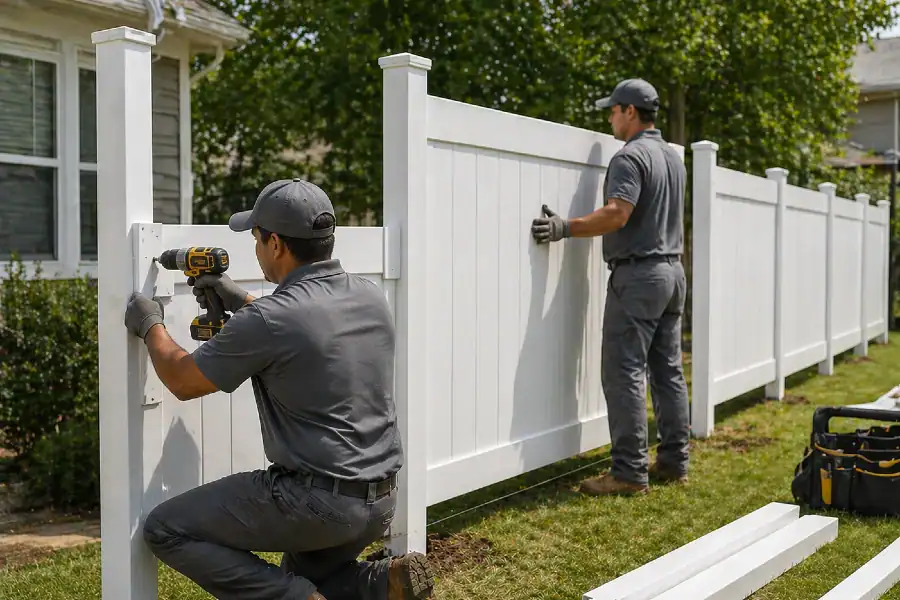
The best way to avoid dealing with a gap after the fact is to ensure your vinyl fence installation is done correctly from the beginning. A skilled fence contractor will assess the grade of your yard, account for low spots along the fence line, and discuss options for managing ground level differences before the first post is set.
When hiring a contractor, ask specifically how they handle gaps between panels and the ground on uneven terrain. A professional installation may include adding a gravel base beneath fence panels, setting posts at varied depths to follow the ground contour, or incorporating a concrete footing along the fence bottom in areas where erosion is expected.
If you are in the Oklahoma City or Norman area and considering a new fence, Tiller Fence and Deck ensures that these details are addressed upfront. With 18 years of experience and a one-year workmanship guarantee, a professional installation reduces the likelihood of gap issues and saves you the cost and effort of repairs later on.
The best approach for uneven ground is a combination of compacted soil and gravel on the low end, paired with hardware cloth buried a few inches into the ground to block digging. For a more permanent fix, a concrete border along the fence bottom is the most reliable option.
Not always. Ground settling and shifting soil are natural processes that can create gaps even after a perfect installation. However, consistent or large gaps across the entire fence line may indicate the fence was not properly adjusted to the terrain during installation.
Dirt and gravel is the least expensive option, followed closely by plastic garden edging. Both materials are available at any hardware store and require no special tools to install.
Yes. Even a gap of three to four inches is enough for many small dog breeds to squeeze through or push past. Buried hardware cloth is the most effective solution for keeping small dogs safely in the yard.
If done correctly, it should not. Using gravel rather than solid concrete in areas where water needs to pass through will preserve natural drainage. When pouring concrete, always slope it slightly away from the panels to direct water flow away from the fence.
Shrubs and ground cover can help deter pets, but dogs love to test boundaries and will often push past plants. Landscaping works best when combined with a physical barrier like hardware cloth rather than as a standalone solution for pet containment.
A gap under your vinyl fence does not have to be a permanent eyesore or a security risk. From quick and affordable fixes like gravel and plastic garden edging to durable long-term solutions like concrete borders and buried hardware cloth, there is an approach that fits every yard, budget, and level of concern. The key is choosing the right fix for your specific situation and following through with regular maintenance to protect your investment for years to come.
Need help fixing gaps under your vinyl fence?
Contact us today for expert solutions and reliable service that keeps your fence secure and looking its best.


