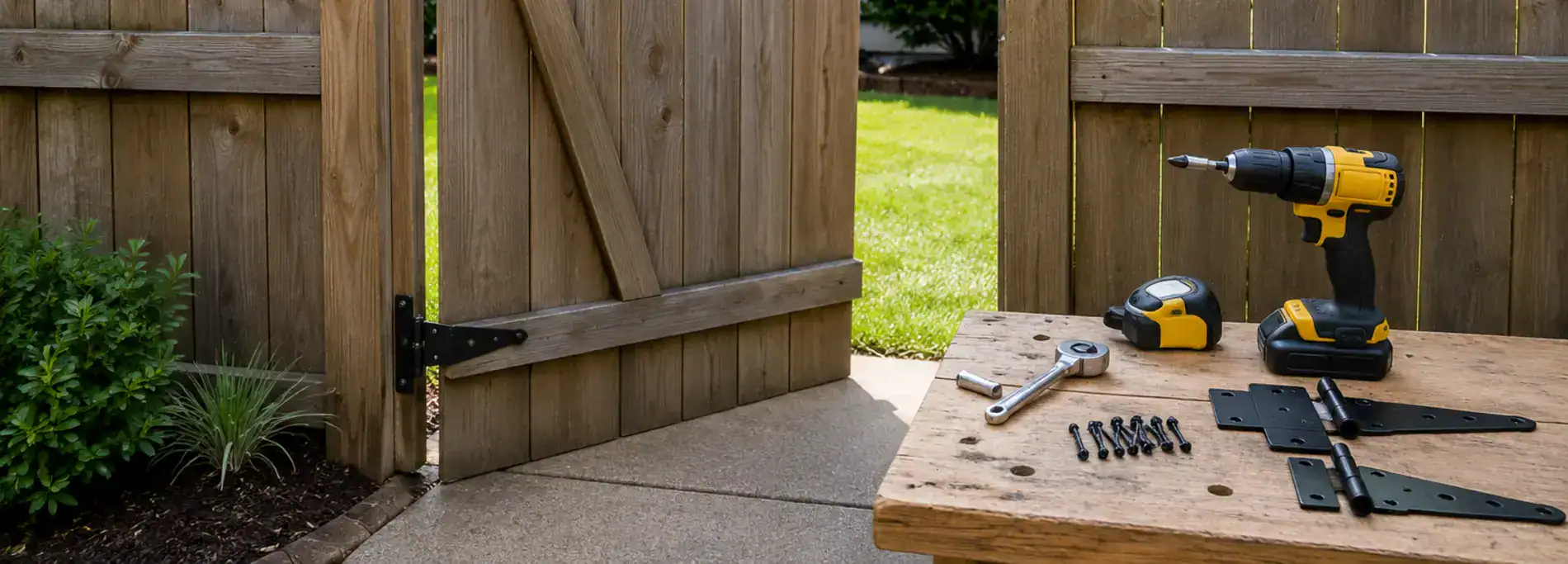
Gravity takes its toll on us all… even our fences. We are not fence-shaming, but a sagging fence gate can go from charmingly rustic to annoyingly dysfunctional pretty fast. Maybe it drags across the ground, it leans perhaps like it had a long night out, or maybe it just refuses to latch, no matter how nicely you ask. The good news is that learning how to fix a sagging fence gate is entirely doable. With a few simple checks, a couple of tools, and some helpful tips, you can restore your gate without frustration. Tiller Fence and Deck is here to walk you through the process so your fence looks great and works correctly again.
Related Article: How Long Does a Wood Deck Last? (And Tips to Extend Their Lifespan)
Why Fence Gates Start to Sag
Before grabbing tools, it helps to understand what actually caused the sagging gate. A fence is a connected structure, and once one part shifts, the rest begins pulling downward or leaning out of place.
Common Causes You Can Spot Early
These issues often show up long before the gate completely fails.
- The fence post begins to wobble
- The gate drags the ground
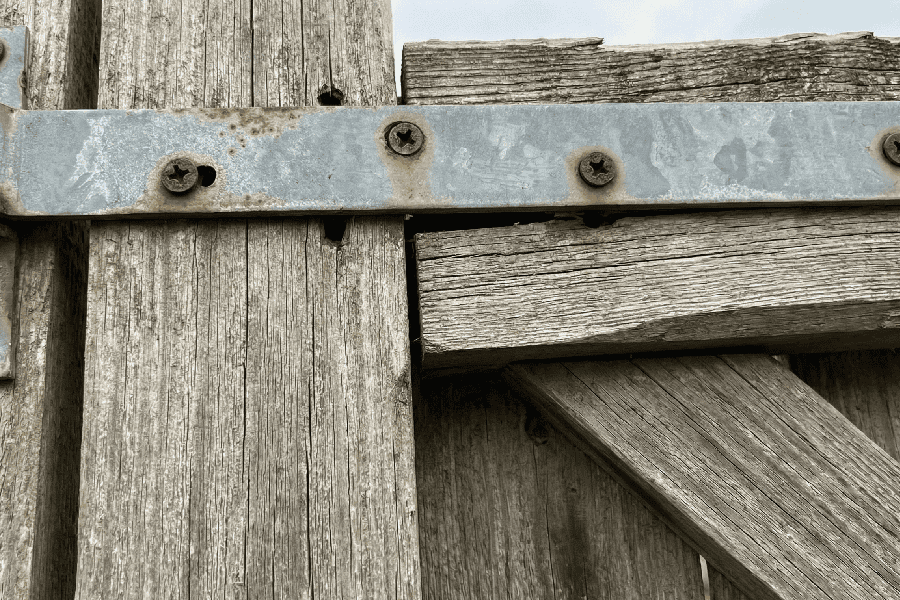
- Screws or hinges loosen
- Moisture causes rot in the timber
These signals tell you the fence needs attention before the repair becomes complicated.
After spotting the early symptoms, take a closer look at how the fence is responding to weight, movement, and weather. A small shift often develops into a full lean across the structure if ignored.
How Gravity and Weather Work Against Your Wood Fence
A wood fence deals with constant weather conditions. Rain introduces moisture, heat dries it out, and cold temperatures shift the soil around the concrete footing. These changes create slow movement in the fence. Gravity adds a steady force against the bottom hinge side of the gate, eventually causing sagging, leaning, and difficulty closing.
How to Identify a Leaning Fence Before It Gets Worse
A leaning fence rarely becomes a problem overnight. There are clues along the way, and spotting them early can save you from a larger fence repair later.
Visual Checks Homeowners Often Miss
Take a slow walk along your existing fence and watch for small details that feel slightly off.
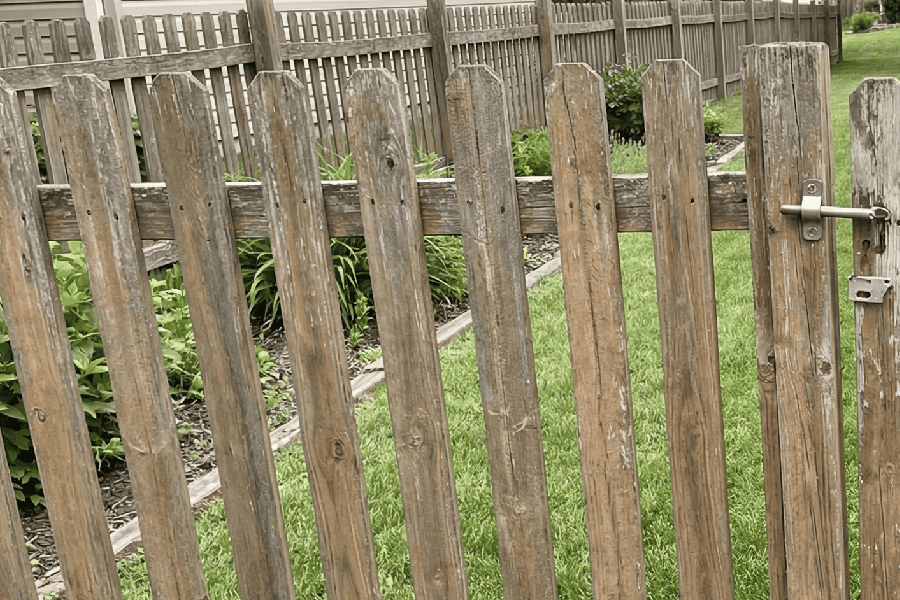
- Pickets no longer line up
- The latch on the gate hits the frame incorrectly
- The gate needs a push to close
- The gap near the property line looks uneven
These little changes often appear before the entire fence begins leaning in a noticeable way.
A quick inspection of the rails, the other end of the gate, and the surrounding yard can help you understand how far the issue has progressed.
Simple Tests to Measure How Much Lean Is Happening
Use these steps to double-check what your eyes already noticed:
- Lift the gate gently to see if it rises too easily
- Hold a level against the fence post
- Swing the gate slowly and listen for scraping
- Look for new holes or shifting soil near the base
These simple checks indicate whether the gate is slightly sagging or if the entire structure needs a more extensive repair. Once you know which parts are failing, you can choose the most cost-effective repair option.
Inspecting the Fence Post That Holds the Gate
The fence post is often the culprit. If the post shifts, everything attached to it begins to fail.

Signs Your Post Is Failing
A damaged post usually gives itself away. Look for rot in the wood, a cracked surface, or concrete pulling away from the ground. Push lightly to see if the post moves. Any noticeable wobble means the post is no longer securely fastened.
Some posts fail because of moisture, age, or poor installation. Others break because the gate is too heavy for the structure to support. If the post leans forward or bends at the bottom, the gate cannot stay square.
When Bracing Helps and When It Does Not
A brace can support the post if the material is still strong. Bracing one end of the fence can help prevent further leaning while you correct the problem.
However, bracing will not help if:
- The timber is soft
- The concrete footing has cracked
- The post shifts more than a few inches
- Moisture has caused deep rot
In those cases, a new post becomes the correct solution.
Step by Step: How to Fix a Sagging Fence Gate at Home
Fixing a sagging fence gate becomes much easier once you understand where the problem starts. This guide walks you through the most common homeowner-friendly steps for lifting, tightening, and realigning your gate. Each step focuses on simple checks and adjustments that help restore the structure without extra frustration.

1. Lift the Gate Slightly to Find the Low Corner
Start by gently lifting the gate from the side that sags the most. If the gate rises easily, the issue is usually hardware-related. If it feels heavy or uneven, the post or rails may be pulling downward. Identifying the low corner helps you target the correct fix.
2. Tighten the Hinges in the Correct Order
The bottom hinge handles most of the weight. Begin there and tighten the screws until the hinge feels secure. Move to the top hinge next and tighten it while keeping the frame as level as possible. This order helps square the gate frame. Once both hinges feel solid, swing the gate open and closed to see whether the movement improves.
3. Add a Turnbuckle or Diagonal Brace for Extra Lift
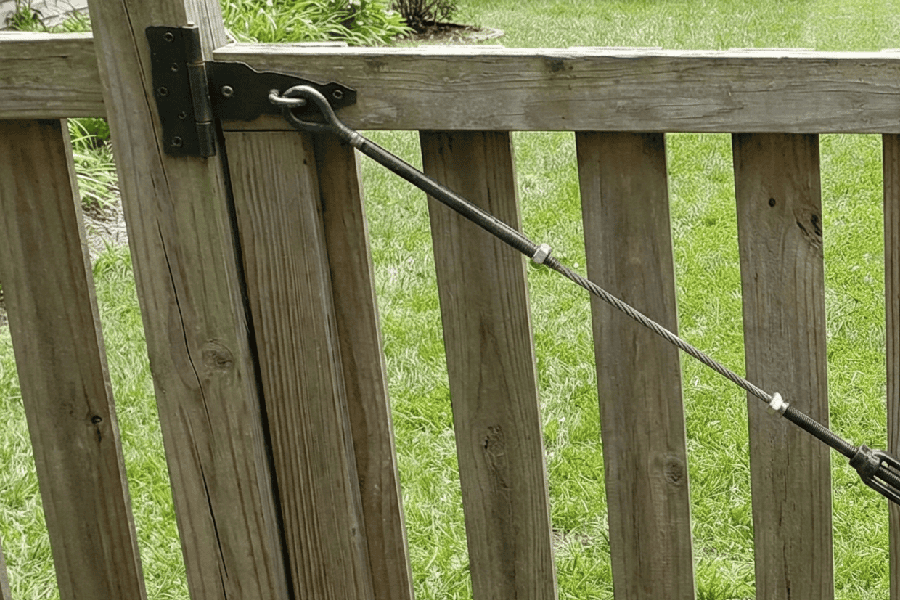
A turnbuckle works well for a sagging fence gate that needs a quick, effective lift. Install it diagonally from the top corner on the hinge side to the bottom corner on the latch side. Tighten it slowly and watch the gate rise back into position. If you prefer a sturdier option, use a wooden or metal brace across the same angle for long-term support.
4. Reinforce or Replace Weak Hardware
Check for rusted screws, bent hinges, or loose brackets. Replace damaged hardware and make sure everything is securely fastened. Strong hardware prevents the gate from pulling downward again. After installing new pieces, double-check that the alignment still looks correct.
5. Realign the Latch Area for a Proper Close
If the gate does not meet the latch correctly, adjust the strike plate. Shift it up, down, inward, or outward until the latch meets it cleanly. A sagging gate often stops closing well before it looks noticeably crooked, so this step makes a bigger difference than most homeowners expect.
6. Test the Gate Movement and Make Small Adjustments
Swing the gate open and closed several times. Listen for dragging, scraping, or clicking. Look at the spacing between the gate and the post to confirm the frame sits straight. If the movement feels smooth, tighten all screws once more to lock the adjustments in place.
7. Inspect the Post One Last Time
Even if the gate now sits level, check the post again. Make sure it does not wobble and that the concrete footing is stable. A weak post causes repeated sagging, so a final inspection ensures the repair holds over time.
When a New Post Is the Best Fix
A new post gives the gate a fresh start and often prevents future sagging.

Choosing the Right Material for a Fresh Start
Most homeowners choose wood to match the fence, but metal posts provide added strength. Make sure the material is moisture-resistant and stable in your yard. A weak post will simply cause the same sagging problem again.
Setting the Post Correctly for Long-Term Stability
Here is a steady approach:
- Begin by digging a deep enough hole
- Place the post and fill the base with concrete
- Keep the post level while the concrete cures
- Attach the hinge after everything is set
- Lift and test the gate so it swings correctly
This method prevents leaning and keeps the fence upright during shifting weather conditions.
Once the post is installed correctly, the rest of the structure can hold its weight without pulling downward.
Straightening a Wood Fence That Pulls the Gate Out of Alignment
Sometimes the problem is not the post but the wood fence itself. Warped rails, loose brackets, or shifting timber can pull the gate out of place.
How Warped Rails Affect Your Fence Gate
Rails bend over time, especially in weather that swings between moisture and heat. When rails twist, the gate loses support. This results in the gate rubbing against the ground or hitting the latch incorrectly.
Hardware Issues That Lead to a Sagging Gate
Loose screws, worn hinges, or rusted bolts change how the gate hangs. Replacing old hardware can restore the square shape of the gate frame. Double-check the alignment on both sides and make sure each hinge is attached securely before lifting the gate again.
The Lazy Way to Lift a Sagging Gate
Not every sagging fence gate needs major repairs. Sometimes you just need a quick fix that gets the gate functional again so you can move on with your day.
Try these simple shortcuts:
- Use a turnbuckle across the gate frame to lift the sagging corner
- Add a temporary support block under the low side
- Tighten visible screws that are beginning to loosen
These small tricks are not long-term solutions, but they buy time and keep the gate working until you are ready for a proper repair.
Minor Repairs That Make a Big Difference
Before replacing anything, check the easy fixes. Hinges and hardware carry a lot of weight, and once they loosen, the entire structure begins pulling downward.
Simple improvements include:
- Realigning sagging hinges
- Replacing bent brackets or screws
- Tightening the bottom hinge side first to square the frame
Once these adjustments are complete, swing the gate open and closed a few times. Even small corrections can restore smooth movement and help the fence stay upright.
How to Realign a Fence Gate Without Replacing It
If the frame itself is still in good shape, realignment may be all you need. This approach keeps the original material in place and corrects the sag without replacing the fence post or rails.
A quick realignment usually involves:
- Checking that the corners sit square
- Adjusting the latch area so the gate closes correctly
- Tightening hardware while the gate sits level
Realignment often works best for an existing fence that has shifted slightly due to weather or ground movement.
Choosing the Most Cost-Effective Option
Homeowners want to fix the problem without overinvesting. The most cost-effective option depends on whether the sagging is caused by hardware, wood movement, or structural failure.
In general:
- Hardware issues can be repaired quickly
- Warped timber or broken rails may need replacement
- A failing post usually requires a new post set in concrete
By understanding what is causing the sagging, you can choose a repair that makes sense without spending more than necessary.
When DIY Is Not Enough

Some repairs go beyond quick fixes. When a fence or gate starts leaning heavily or key components are damaged, professional fence repair becomes the smarter option. This is especially true when stability and safety are on the line.
Situations that typically require a technician include:
- Deep rot in the post that weakens the fence from the ground up
- Large shifts in the fence line caused by soil movement or age
- Cracked concrete footing that no longer holds posts in place
- A gate that keeps sagging even after adjustments, signalling a structural issue
At this point, the goal is not just to make the gate usable again. It is to make the entire fence secure so it does not continue pulling, leaning, or causing damage to surrounding sections.
How Professional Fence Repair Saves Time and Money
A trained technician looks past surface issues to find what is actually causing the sag. Instead of repeating temporary fixes, they address the source of the problem so it does not come back a few months later.
When you work with professionals like Tiller, the process typically includes:
- Inspecting the full fence and gate structure, not just the problem area
- Checking soil conditions and footing stability beneath the posts
- Reinforcing weak sections using proper materials and tools
- Completing precise gate installation or hardware replacement when needed
For many homeowners, this approach prevents repeated repairs and unexpected failures. A properly repaired fence and professionally installed gate restore alignment, improve function, and keep the entire structure solid in the long run.
Tiller Fence and Deck Repair
Tiller Fence and Deck understands how frustrating a sagging fence gate can be, especially when you have already tried a few fixes on your own. Whether the issue came from an old post, soil movement near the house, or hardware that loosened over time, our team can help restore the structure and explain what caused the problem in the first place. We want your fence to stay upright, function correctly, and finally feel reliable again.
If your gate keeps leaning or dragging after basic maintenance, reach out for a local inspection. We review the entire setup and recommend the most cost-effective repair for your yard. Our technicians are always available to answer questions or comments about your fence concerns, and we can guide you on protecting the wood with sealing or painting once the repair is complete. When you are ready to fix the sagging and move forward with confidence, contact Tiller Fence and Deck and let us help you get the job done right.