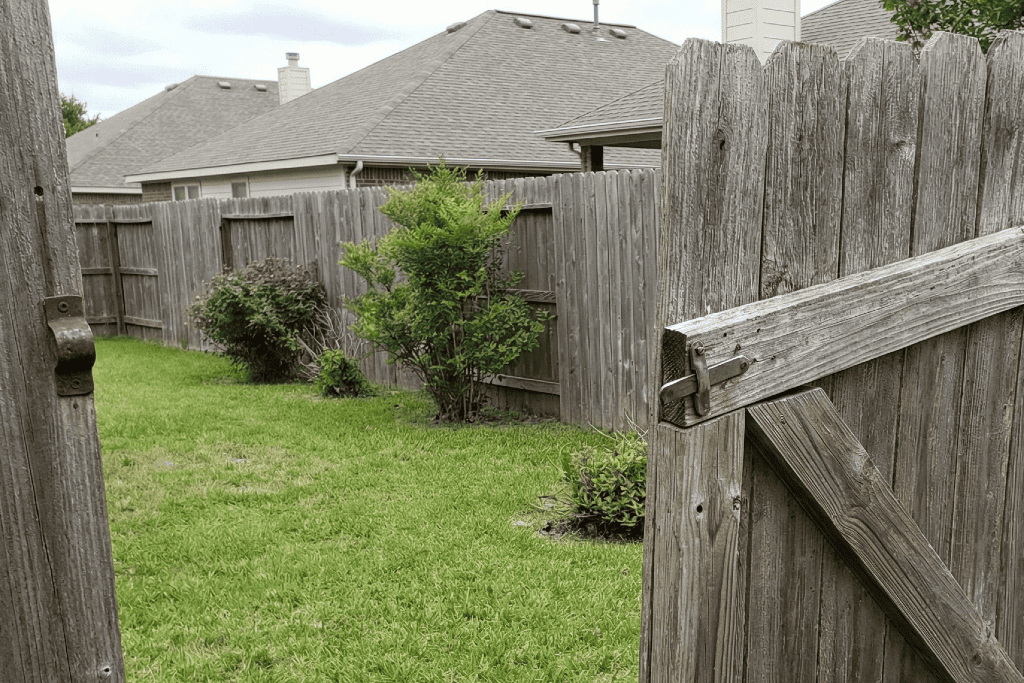
In many cases, fixing fence gate hinges is as simple as tightening loose hardware, lubricating rusty hinges, replacing worn screws, or realigning the gate. If the hinges are bent, heavily corroded, or the gate post has shifted, the repair may be more involved or require replacement parts.
This guide from Tiller Deck and Fence explains how to fix fence gate hinges step by step, from diagnosing the problem to choosing the right repair. You’ll learn which fixes most homeowners can handle with basic tools, when a little elbow grease is all it takes, and when it’s time to call a professional.
Whether you have a wooden or metal fence, keeping your gate opening and closing smoothly protects your property, improves security, and helps prevent minor hinge issues from turning into costly fence repairs.
Why Fence Gate Hinges Fail
Fence gate hinges work hard every time the gate opens and closes, so it’s no surprise they eventually wear out. While some problems develop naturally with age, others are caused by poor installation, heavy gate weight, changing weather, or a gate post that has started to shift.
We’ve found that many of these issues can be corrected before they turn into a bigger repair. Understanding what caused the problem is the first step toward choosing the right fix.
Common Causes of Loose, Rusty, and Sagging Gate Hinges
Several factors can cause a fence gate to sag or stop working properly. Some are simple maintenance issues, while others point to a deeper issue that needs more attention.
Common causes include:
- Loose screws, bolts, or other hardware that no longer hold the hinges securely.
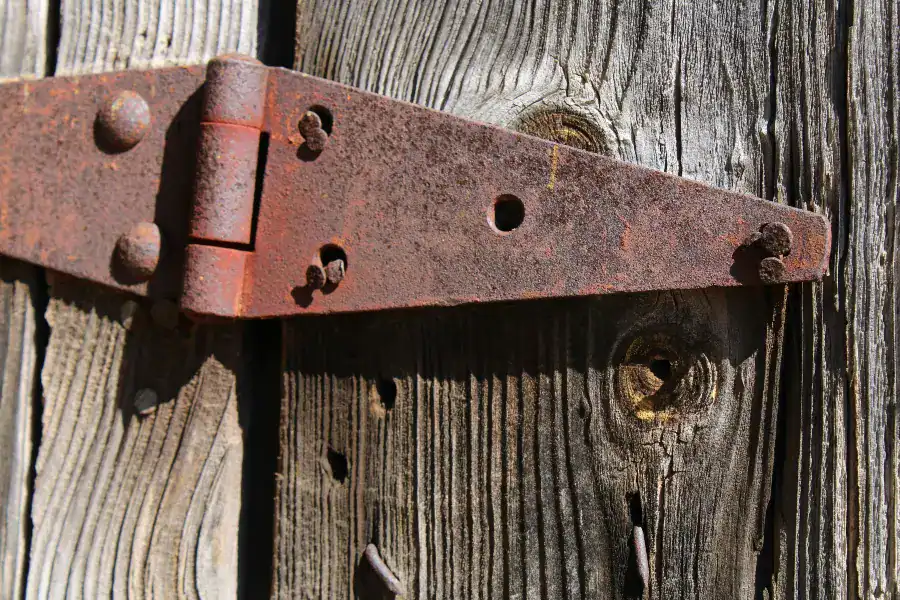
- Rust caused by humidity and rain makes hinges stiff or difficult to move.
- Old hinges that have worn out or become bent after years of use.
- Heavy gates that place constant pressure on the hinges over time.
- A wood or concrete gate post that has shifted because of soil settling.
- Poor installation or hinges that aren’t rated for the gate’s weight.
Weather also plays a bigger role than many homeowners realize. Heat, cold, and moisture cause wood to expand and contract throughout the year, while metal hardware naturally wears over time. Eventually, even a well-built fence can lose its proper alignment if these small changes aren’t addressed.
The sooner you spot loose hardware, rust, or sagging, the easier the repair usually is. Regular inspections help catch problems before they lead to broken hinges, damaged posts, or a fence gate that won’t close properly.
Diagnose the Problem Before You Start
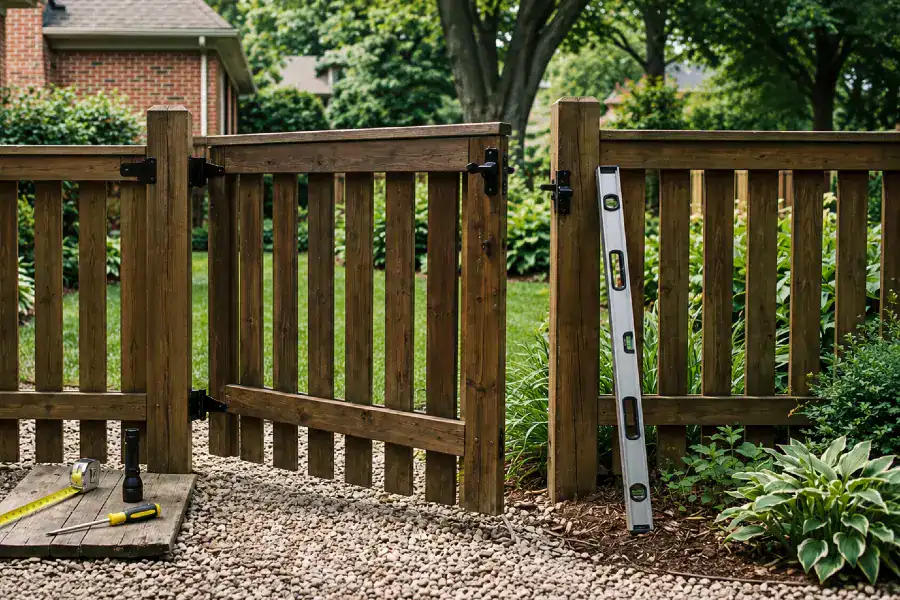
Before grabbing a screwdriver or replacing the hinges, take a few minutes to inspect the entire gate. What looks like a hinge problem is sometimes caused by a shifted post, a worn latch, or a gate that has gradually fallen out of correct alignment.
We always recommend taking a few extra minutes to inspect the entire gate first. It can save time, money, and unnecessary repairs.
Check the Gate Post, Hinges, and Latch
Start by opening and closing the gate several times. Pay attention to where it sticks, drags on the ground, or refuses to latch. Check both hinges for loose screws, bent hardware, cracked mounting holes, or signs of rust.
Next, look at the gate post. It should remain upright without leaning in either direction. If the post has moved, the entire gate can fall out of proper alignment, making it difficult to close properly even if the hinges are still in good condition.
Finally, inspect the latch side of the gate. If the latch no longer lines up with the catch, the problem may not be the hinges at all. A dropped gate or shifted post can throw the entire fence gate out of position.
Decide Whether It’s a Simple Fix or a Bigger Repair
Once you’ve identified the problem, you’ll have a better idea of how to solve it. Tightening loose hardware, adjusting the hinges, or replacing old hinges are all repairs many homeowners can handle themselves.
However, if the gate post has shifted, the gate has severe sagging, or the wood around the hinge is badly damaged, attempting a DIY repair may only provide a temporary fix. Those situations often require reinforcing the post or replacing structural components before installing new hinges.
Addressing the root cause of the problem rather than simply treating the symptoms will help prevent further damage and keep your fence working properly for years to come.
Prevent Future Gate Sagging
Fixing the hinges solves today’s problem, but a few upgrades can help stop your fence gate from sagging again.
Install an Anti-Sag Kit
Anti-sag kits are ideal for gates up to 6 feet high. Most include corner brackets, cable clamps, and a turnbuckle that creates tension across the frame. Tightening the turnbuckle helps lift the latch side of the gate back to the correct height, keeping it square and making it easier to close properly.
For larger gates, reinforce the frame with a diagonal brace or steel support. If the gate post has shifted, however, adding more hardware won’t solve the problem altogether. The post itself may need to be reset before the gate can be properly aligned.
Keep Your Fence Gate Working Properly
A little maintenance goes a long way and helps your gate, much like a garage door, work longer with fewer repairs.
Simple Maintenance Tips
- Inspect hinges, screws, nuts, and bolts for wear or rust.
- Tighten loose hardware before it affects alignment.
- Clean hinges before applying lubricant.
- Loosen stiff hinges slightly before adjusting them if necessary.
- Touch up chipped paint to help protect exposed metal.
- Check that the gate opens, closes, and latches after every adjustment.
If you need to replace screws, use longer screws to improve support on heavy gates. Avoid relying on glue for structural repairs, as it won’t provide the strength required for hinges supporting a gate’s weight.
Choosing the Right Hinges for Your Fence Gate
Not every hinge is designed for the same job. Choosing the right hardware can improve performance, reduce wear, and help prevent future sagging.
Which Hinge Type Is Best?
The best hinge type depends on the size and material of your gate.
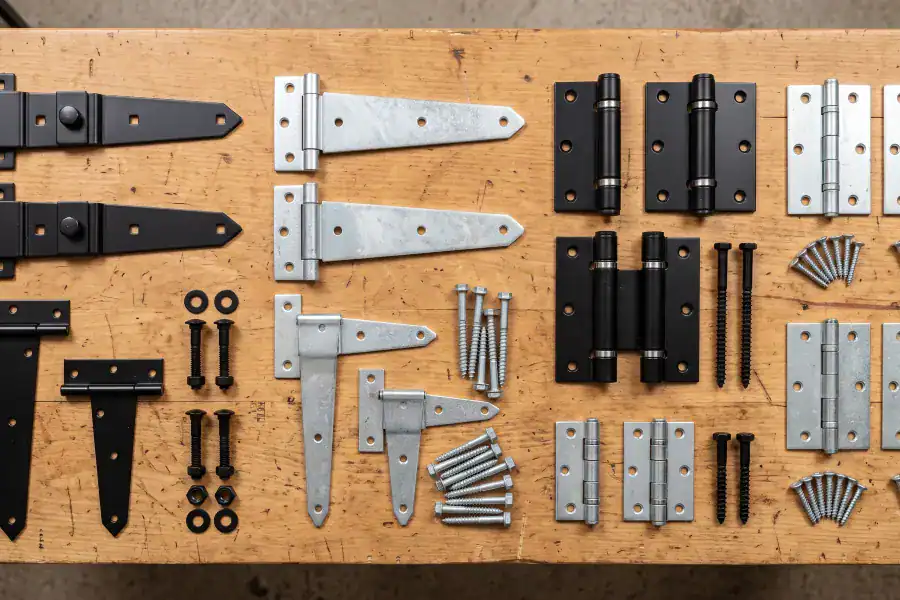
- Ball bearing hinges are ideal for frequently opened gates because they operate smoothly and reduce friction over time.
- Strap hinges distribute weight across a larger area, making them an excellent choice for heavy wood fence gates.
- Heavy-duty adjustable hinges work well on many metal gates because they allow you to fine-tune the alignment as the gate settles.
- Standard butt hinges are often suitable for lighter gates but may not provide enough support for larger installations.
We recommend choosing hinges that are rated to handle your gate’s weight. Installing undersized hardware is one of the quickest ways to end up with sagging hinges and another repair in the near future.
Prevent Future Gate Sagging
Fixing the hinges is only half the job. If you want to avoid having to make the same repair again, it’s worth taking a few extra steps to strengthen the gate’s support and maintain proper alignment over time.
Install an Anti-Sag Kit or Diagonal Brace
If your gate has started to sag under its own weight, an anti-sag kit is often an effective solution. These kits are designed for gates up to 6 feet high and typically include corner brackets, a turnbuckle, and cable clamps that work together to apply tension across the frame. As the turnbuckle is tightened, it helps lift the latch side of the gate back into position and keeps the frame square.
For heavier wood gates, installing a diagonal brace or reinforcing the frame with steel can provide additional support. Whatever method you choose, make sure every bracket is securely attached and test the gate several times after adjusting the tension. If the gate post has shifted or the gate still won’t stay aligned, the problem may be structural rather than hinge-related.
Keep Your Fence Gate Working Properly
A few minutes of maintenance throughout the year can help your gate operate smoothly and prevent small issues from becoming expensive gate repairs.
To extend the life of your gate hinges:
- Inspect the hinges, screws, and bolts regularly for signs of wear or rust.
- Tighten loose hardware before it affects the gate’s alignment.
- Clean dirt and debris from the hinges before applying lubricant.
- Touch up chipped paint on metal hardware to help protect it from moisture.
- Test that the gate opens, closes, and latches properly after making any adjustments.
Routine inspections also make it easier to spot problems early. Catching loose hardware, rust, or a sagging gate before further damage occurs can save you from having to replace the hinges or repair the entire fence later.
When To Call Tiller Deck and Fence
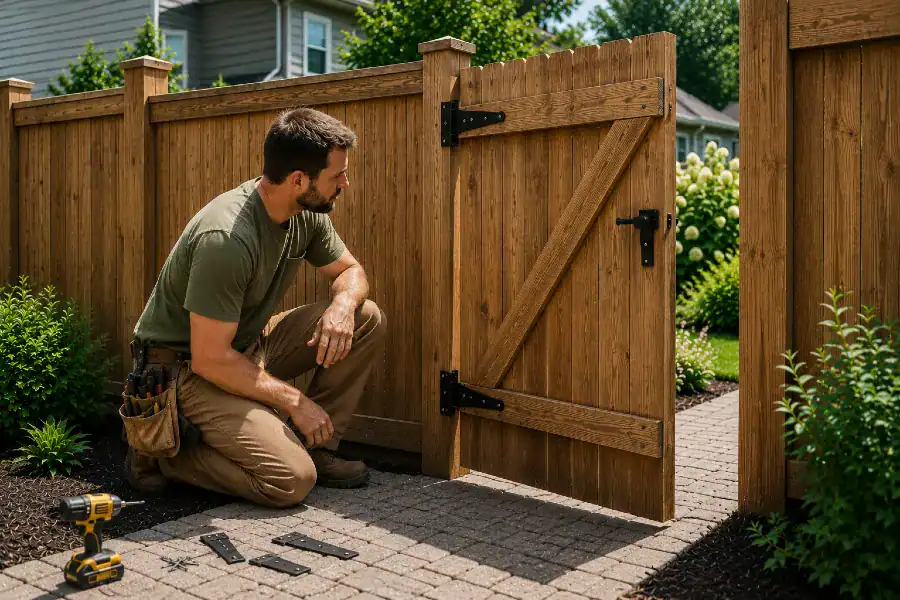
Some repairs are straightforward, but others point to a bigger problem. If the gate post has shifted, the hinges have pulled away from the wood, or the gate has severe sagging, it’s time to bring in a professional. Replacing heavy-duty hinges or resetting a post often requires specialized tools, a drill, and experience to avoid causing further damage.
If you’re wondering whether a simple adjustment is enough or a full repair is the better option, our team can walk you through the process and recommend the most effective solution. From securing loose hinges to replacing damaged gate components, we focus on repairs that restore both function and reliability. We can also help address issues that may not be apparent during a quick inspection, preventing small problems from becoming costly repairs.
At Tiller Deck and Fence, we handle everything from minor hinge adjustments to complete gate replacements. Whether you’re repairing a backyard gate or the main entry to your property, our team can identify the problem, recommend the right solution, and complete the repair correctly the first time. Contact us today to schedule your gate repair and get your gate opening, closing, and securing your property the way it should.